
Data boundary
Identify what work, information, and document context should stay within the environment you control. Keep the scope deliberate and reviewable.
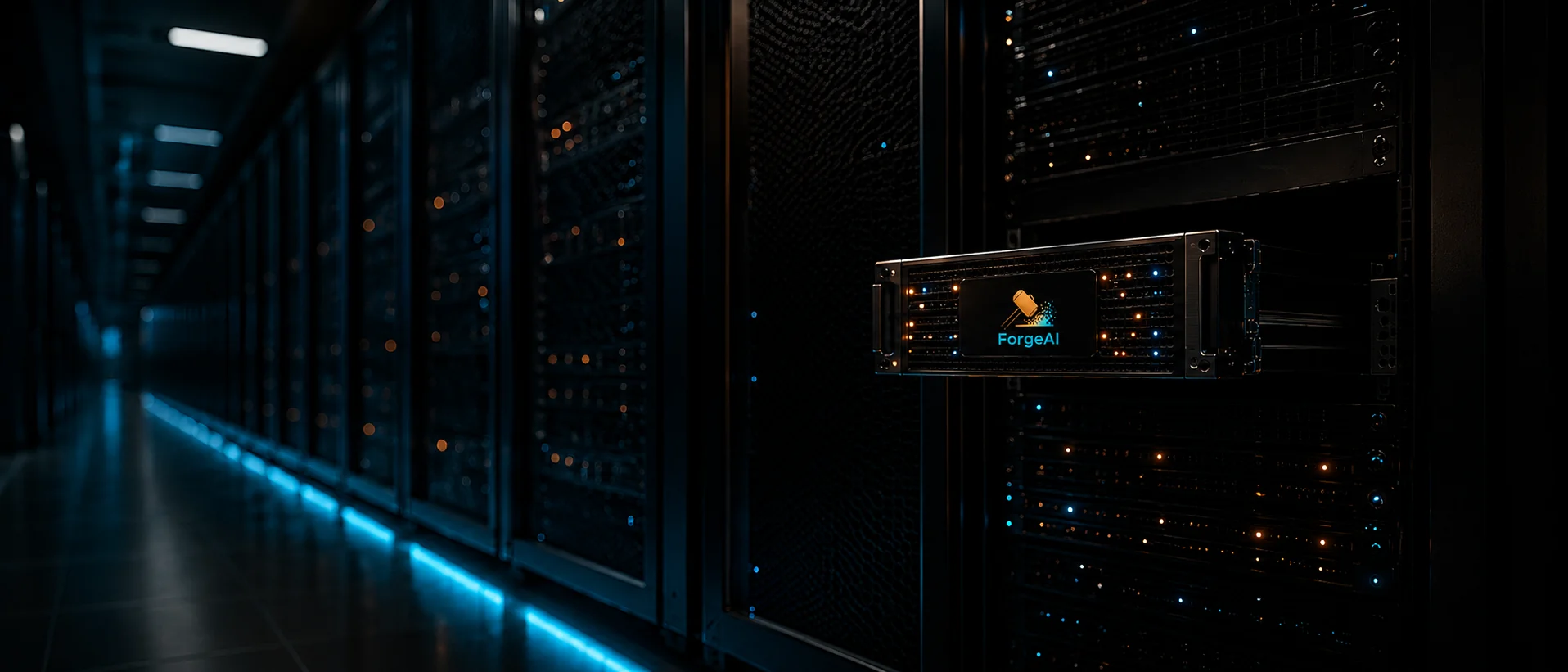
FORGEAI / ON-PREMISE AI SERVER
Available for DemoFor teams with sensitive documents and proprietary process knowledge, the location of AI infrastructure is not a footnote. It is the operating decision underneath every prompt.
BUYER CONTEXT
An on-premise AI server can move core AI work closer to the organization that owns it. It does not remove every security, governance, or operating responsibility. It makes those responsibilities easier to name, assign, and inspect.
Disconnected AI environments still require a deliberate plan for approved artifacts, updates, operational roles, and support. [Red Hat disconnected deployment guidance]
EVALUATION CRITERIA
Use these questions with every option under consideration. A precise answer today is easier to operate tomorrow.
Identify what work, information, and document context should stay within the environment you control. Keep the scope deliberate and reviewable.
Clarify who owns and operates the infrastructure, who can inspect the physical system, and how the commercial model changes when the hardware is yours.
Ask where core inference runs when your team uses the system. Do not treat a familiar interface as an answer to an infrastructure question.
Define who can use the system, what authorization is required, and how access changes are approved. A local server still needs an explicit gate.
Ask how the system arrives, connects to the approved internal environment, receives approved changes, and stays operational over time.
HOW FORGEAI FITS
ForgeAI is a physical AI server installed at your location. You own the hardware, approve the knowledge that belongs inside, and use a physical key as part of the access model.
The ForgeAI chassis is delivered and installed at your physical location, then connected to the internal environment your team controls.
Your team decides which policies, SOPs, documents, and workflows should inform the system. The context is approved, not assumed.
A physical YubiKey token is part of ForgeAI’s access model. No authorized key, no system access.
Core inference is designed to stay local. ForgeAI pairs the customer-owned hardware with an agreed ongoing support model.
KEEP THE STANDARD HIGH
A local server can give your team a more direct answer to where core inference runs and who owns the infrastructure. It should still be paired with disciplined access decisions, approved knowledge, sensible output review, and an operating process that leadership can understand.
If you cannot explain how the system enters the business, what it knows, and who gets through the gate, you are not ready to delegate sensitive work to it.
BUYER QUESTIONS
An on-premise AI server is AI infrastructure installed at an organization’s location rather than run solely on a provider’s remote infrastructure. The buyer still needs to determine its access model, approved information, operating process, and ongoing support.
The customer owns the ForgeAI hardware. The team also decides which documents, policies, SOPs, and workflows are allowed to shape the system’s context, and who is authorized to use it.
ForgeAI uses a physical YubiKey token as part of the access model. That makes possession of an authorized hardware key part of the gate, alongside the access decisions your team controls.
ForgeAI is designed for local operation, and its core inference workflow does not require a cloud connection. Exact capabilities available during an outage depend on the configured environment.
ForgeAI is delivered and installed at your physical location, connected to the internal environment you control, and configured around the knowledge and access boundaries your team approves. Exact installation requirements are confirmed before deployment.
NEXT STEP
See how ForgeAI is installed, how local core inference works, and what a controlled AI boundary could look like in your environment.