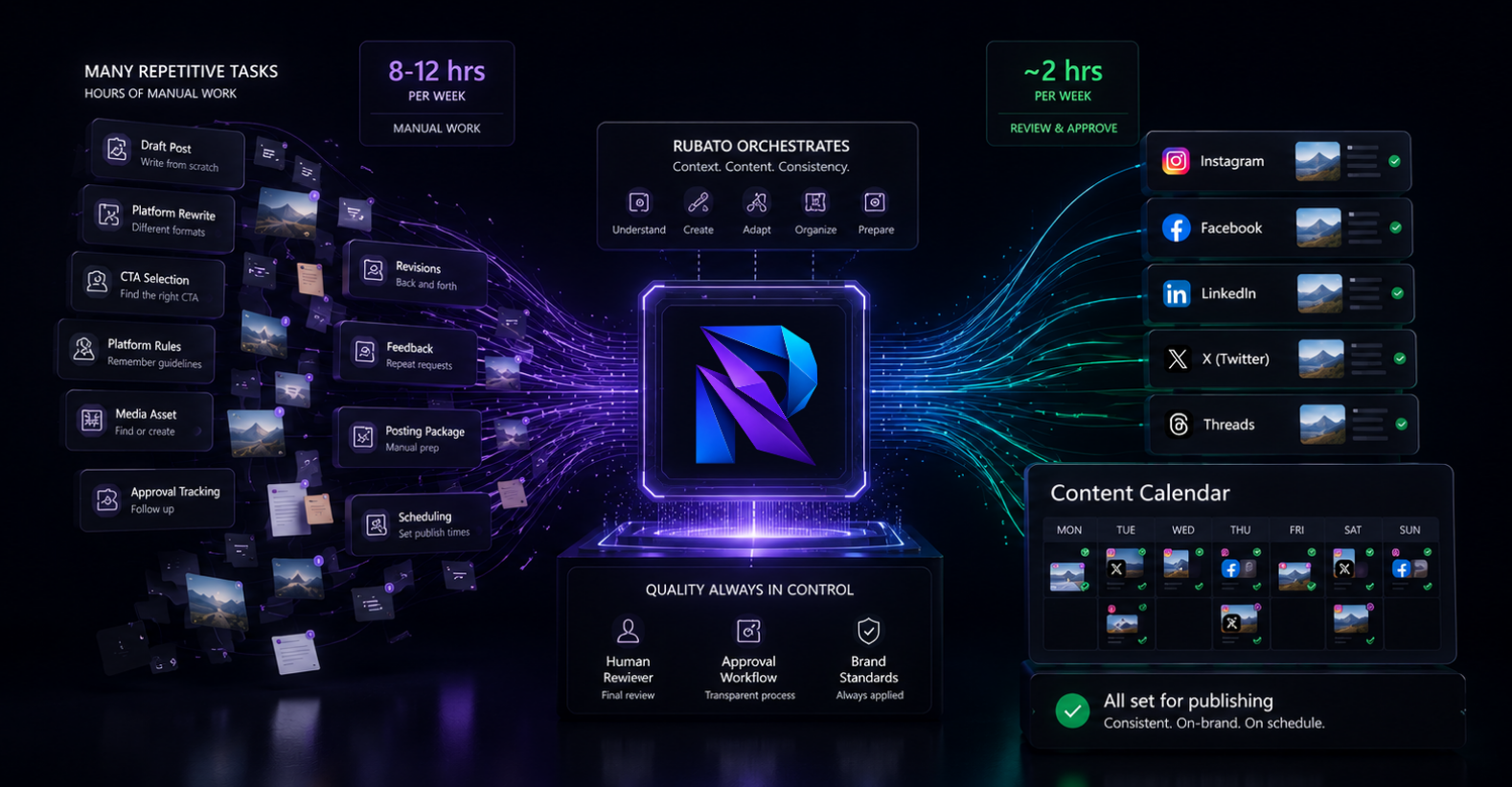

HOW RUBATO IS BUILT
In TestingMore than a generator. A system you can actually run.
Rubato is designed as a local-first, human-reviewed content production workflow that your team can operate, hand off, and inspect.
INTEGRATIONS
Works with the tools your team already uses.
Rubato is designed as a local-first content production hub with integration points for the tools businesses already depend on. Current and planned workflow areas include GitHub for source and version control, n8n for automation workflows, Google Drive handoff workflows, local media libraries, AI model providers, HyperFrames-style video rendering, manual posting exports, and future platform API publishing.
Rubato does not require your team to change everything at once. It improves the production workflow first, then connects automation where it makes sense.
SECURITY & CONTROL
Local-first by design.
Rubato is designed for businesses that want control over their content system. Your customer context, media assets, drafts, approval queue, and workflow configuration can live on your local machine or a controlled environment—because content operations often include sensitive business details: campaign plans, brand strategy, draft messaging, customer information, internal review notes, unpublished launches, and media assets.
Rubato keeps the workflow controlled, auditable, and human-reviewed. You get the power of AI-assisted content production without turning your brand process into a black box.
ONBOARDING
Built to be handed off.
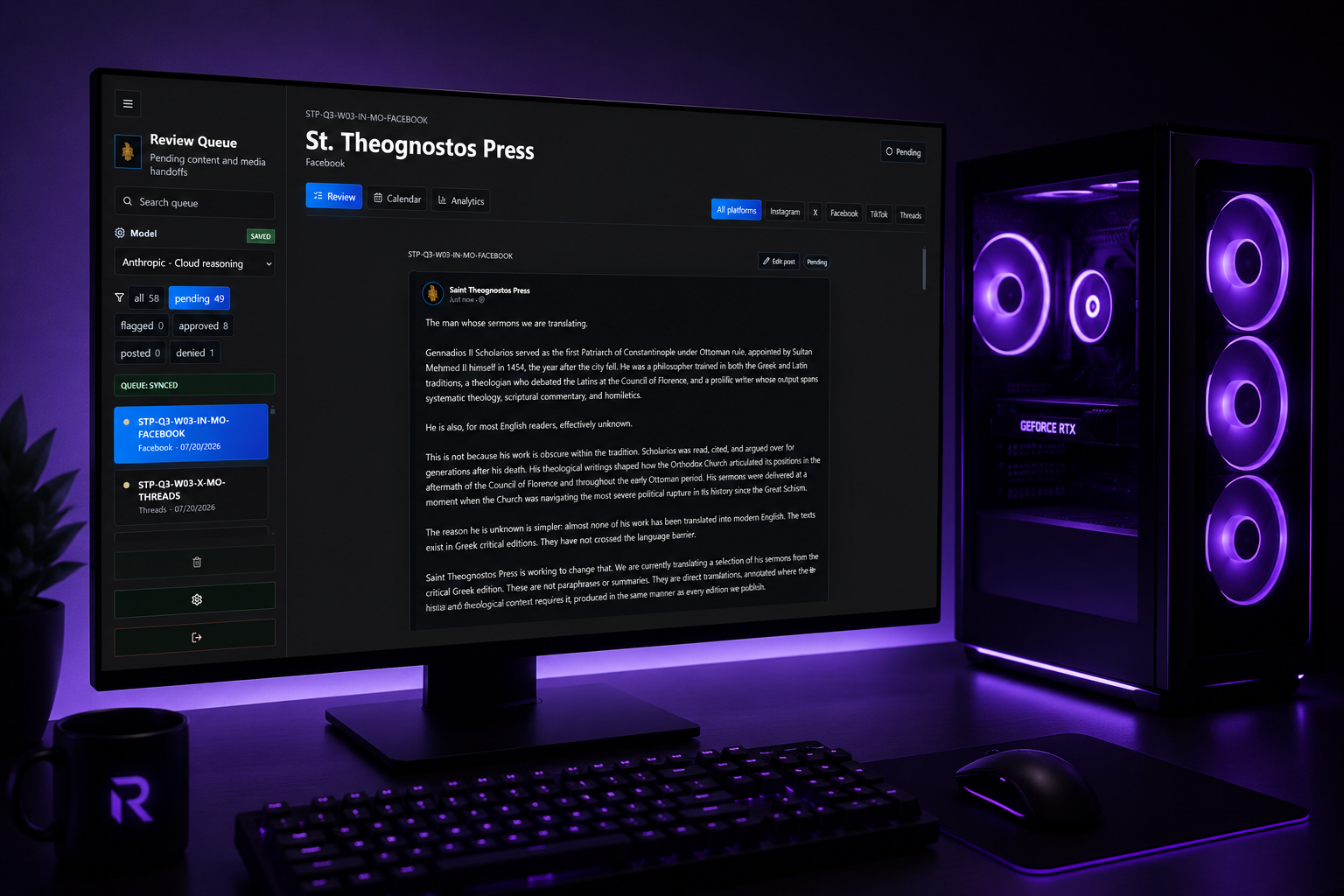
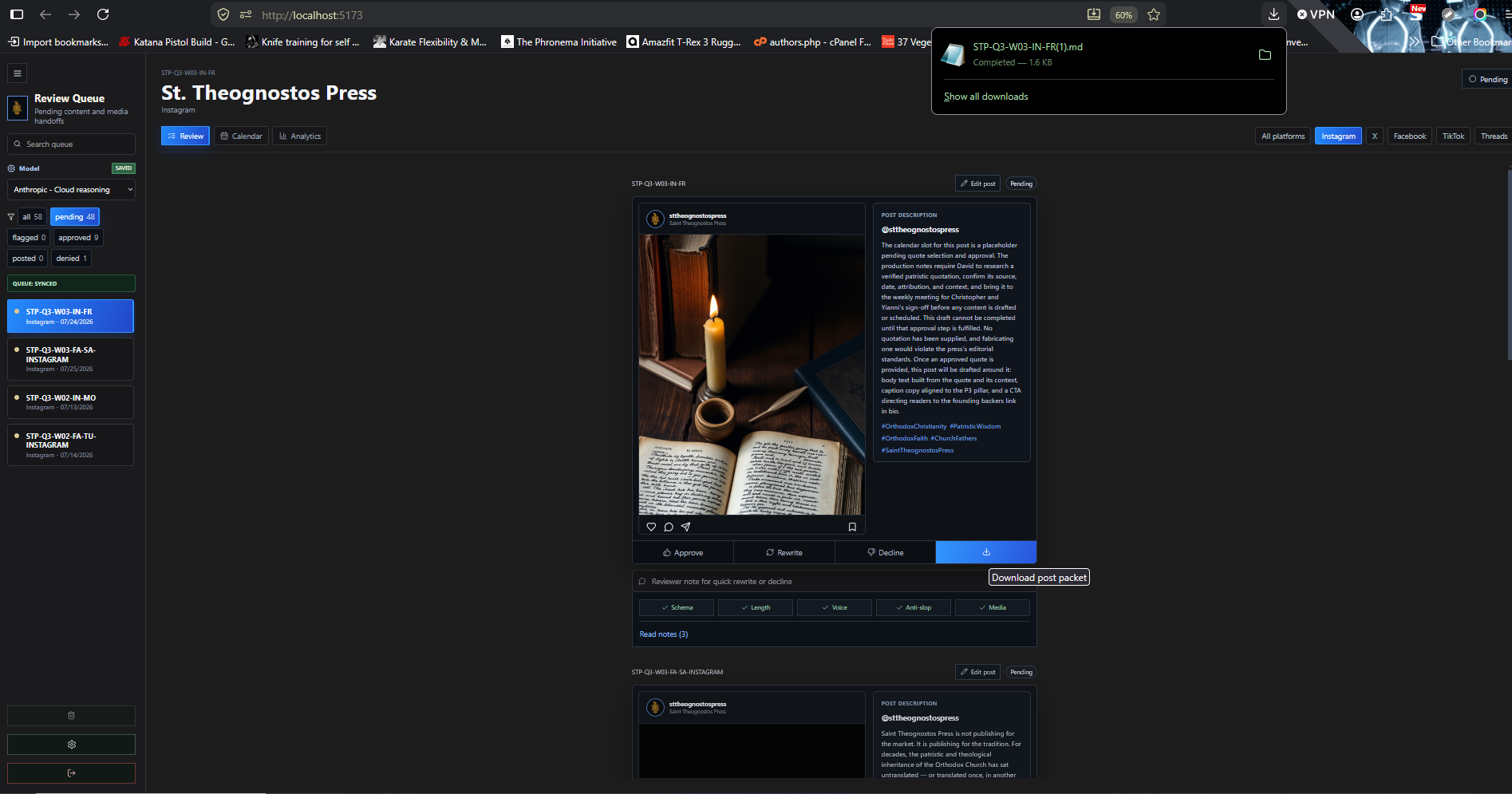
Rubato is designed so another person can install it, configure it, and start reviewing content without needing to understand the whole codebase. A new setup can include a Windows setup script, customer profile configuration, a local media asset folder, the review UI, manual posting instructions, documentation for operators, and an optional n8n workflow handoff.
For a new customer, Rubato can be adapted by updating the customer profile, brand context, audience, voice, design rules, and content calendar.

SUPPORT & TRAINING
Your team is not left guessing.
Rubato can be supported with setup documentation, operator quickstart guides, customer onboarding docs, review workflow instructions, troubleshooting notes, and test suites to confirm the system is working. This makes it easier to hand Rubato to a team member, assistant, contractor, or client-side operator.
The goal is not just to install software. The goal is to make the workflow usable.
EXIT STRATEGY
Your content stays yours.
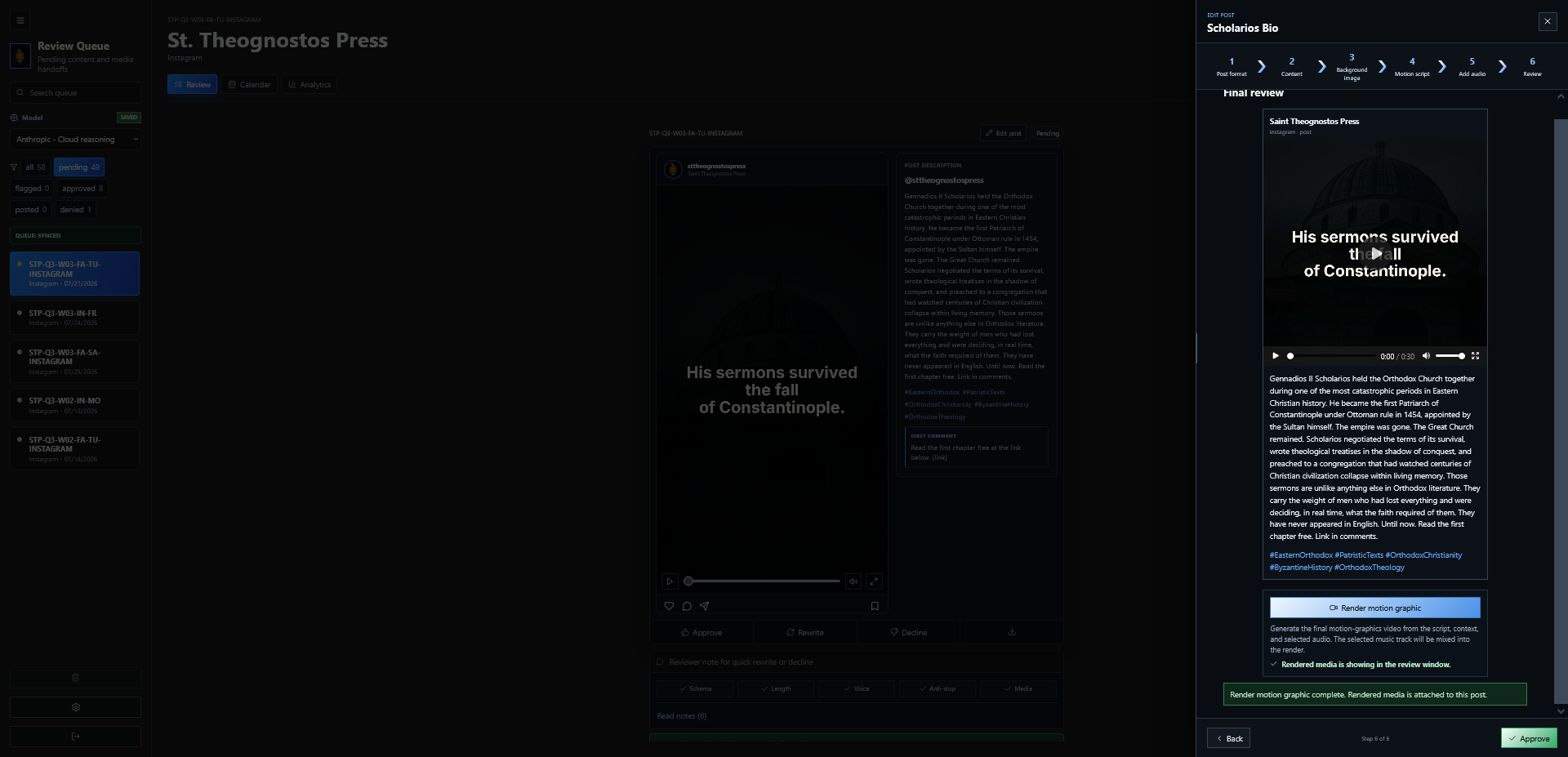
Rubato is not designed to trap your team. Your drafts, calendars, media assets, customer context, and manual posting packets are stored as accessible project files. If you stop using Rubato, you can still export and inspect the work. No mystery database. No locked creative assets. No “where did our content go?” panic.
Rubato gives you a system while keeping your content portable.
TIME & COST BENEFITS
Save hours every week without lowering standards.
Rubato is built to reduce the repetitive work that eats up a content team’s week: drafting posts from scratch, rewriting for each platform, finding the right CTA, remembering platform rules, packaging manual posting assets, tracking approvals, repeating the same feedback, and coordinating copy and media.
For many teams, that means hours returned every week. For agencies, it means more client capacity without hiring another content coordinator. For founders and operators, it means social content stops being the thing that only happens when everything else is done.
Book a Demo